DJI Mavic Pro User Manual: A Comprehensive Guide
This comprehensive guide details the DJI Mavic Pro, offering insights into its features, operation, and safety protocols, alongside manuals and PDF resources.
The DJI Mavic Pro represents a significant leap in drone technology, offering a compact and powerful aerial platform for both enthusiasts and professionals. This drone boasts a fully stabilized camera, intelligent flight modes, and advanced obstacle sensing, all within a remarkably portable design.
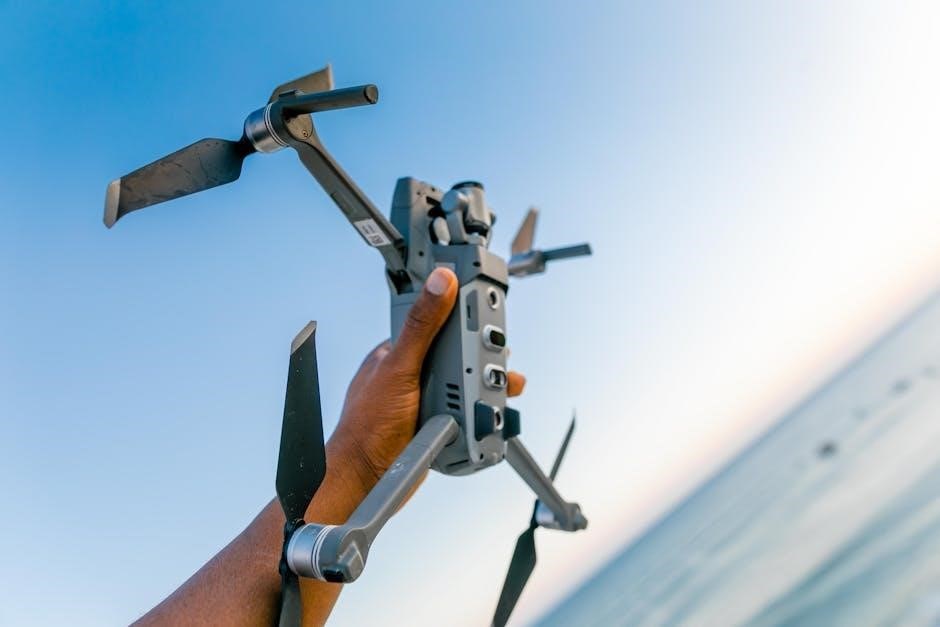
This user manual serves as your essential companion, guiding you through every aspect of the Mavic Pro – from initial setup and flight basics to advanced camera settings and maintenance procedures. Explore the DJI Download Center for additional manuals and resources. Prepare to unlock the full potential of your Mavic Pro and capture stunning aerial footage!
Unboxing and Component Overview
Upon unboxing your DJI Mavic Pro, carefully inspect the contents. You should find the aircraft itself, a remote controller, intelligent flight batteries, propeller pairs, a battery charging hub, and various cables. Additional items include a gimbal clamp, filters, and the user manual – crucial for understanding operation.
Familiarize yourself with each component. The aircraft features foldable arms for portability. The remote controller provides flight control and access to intelligent modes. Refer to the DJI Download Center for detailed manuals outlining each part’s function and ensuring a smooth setup process.
Remote Controller
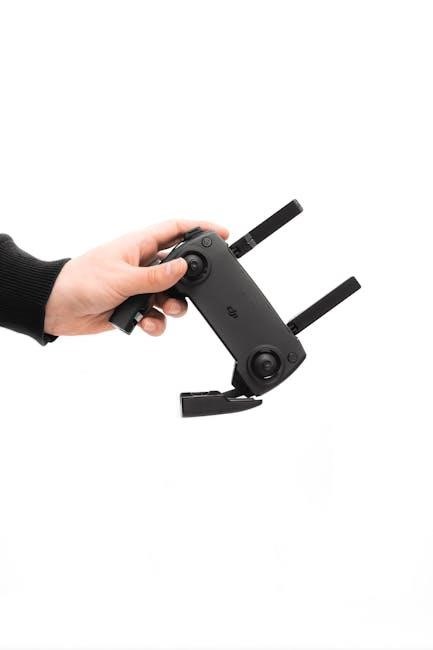
The DJI Mavic Pro’s remote controller is your primary interface for flight. It features integrated controls for piloting the drone and accessing various functions. Ensure a stable connection to your mobile device for full functionality, utilizing the DJI GO 4 app.
The controller’s range allows for extensive flight distances, but always maintain visual line of sight. Familiarize yourself with the control sticks, buttons, and dials before your first flight. Detailed instructions regarding operation and customization can be found within the official DJI Mavic Pro manual available online.
Remote Controller Buttons and Functions
The DJI Mavic Pro remote controller boasts several key buttons. The power button initiates the controller, while the flight mode switch selects between various flight options. Control sticks govern movement – left for altitude/rotation, right for forward/sideways flight.
Customizable buttons allow personalized control schemes. The return-to-home button initiates automated landing. The camera shutter button captures photos and starts/stops video recording. Refer to the DJI Mavic Pro manual for a detailed diagram and explanation of each button’s function, ensuring safe and efficient operation.
Connecting to Your Mobile Device
Connecting your mobile device to the DJI Mavic Pro remote controller is crucial for utilizing the DJI GO 4 app. Ensure your smartphone or tablet is fully charged and compatible. Use the provided USB cables to connect your device to the remote.
The DJI GO 4 app will prompt you to log in or register. Once connected, the app displays a live camera feed, flight telemetry, and access to intelligent flight modes. Consult the DJI Mavic Pro user manual for troubleshooting connection issues and optimal device placement for a stable link.
Aircraft Setup
Proper aircraft setup is vital before each flight with your DJI Mavic Pro. This involves securely installing the propellers, ensuring they are correctly matched to the motors – marked with color codes. Next, battery installation and charging are essential; fully charge the battery using the provided charger before your first flight.
Refer to the DJI Mavic Pro user manual for detailed instructions on these procedures. A pre-flight check, as outlined in the manual, confirms all systems are operational and ready for safe flight.
Installing the Propellers
Correct propeller installation is crucial for safe DJI Mavic Pro operation. Each propeller is marked, and must be attached to the corresponding motor with the same colored ring. Ensure a secure fit by pressing down and rotating to lock.
The DJI Mavic Pro user manual provides a clear diagram illustrating the correct propeller placement. Incorrect installation can lead to instability and potential crashes. Always double-check before flight, and replace damaged propellers immediately. Proper installation ensures optimal performance and flight safety;
Battery Installation and Charging
Installing the battery into your DJI Mavic Pro is straightforward; align and slide it in until it clicks securely. Always use DJI-approved chargers and cables for optimal charging and battery health. The DJI Mavic Pro user manual details charging procedures and safety precautions.
Fully charge the battery before the first flight. Monitor the charging process via the DJI GO 4 app. Avoid overcharging or leaving the battery unattended during charging. Proper battery management extends its lifespan and ensures reliable performance during flight.
DJI GO 4 App
The DJI GO 4 app is essential for controlling your Mavic Pro and accessing its intelligent features. It provides a live camera view, flight telemetry, and access to various settings. Download and install the app from the App Store or Google Play.
Account registration and activation are required to unlock the app’s full functionality. The DJI Mavic Pro user manual guides you through the setup process. Ensure your mobile device is securely connected to the remote controller for seamless operation and optimal flight control.
Downloading and Installing the App
To begin, locate the DJI GO 4 app on either the Apple App Store (for iOS devices) or Google Play Store (for Android devices). Search for “DJI GO 4” and select the official application developed by DJI.
Tap the “Install” button and allow the app to download and install on your mobile device. This process may take several minutes depending on your internet connection speed. Once installed, open the app to begin the account registration and activation process, as detailed in the Mavic Pro user manual.
Account Registration and Activation
Upon launching the DJI GO 4 app, you’ll be prompted to create a DJI account or log in if you already have one. New users should tap “Register” and follow the on-screen instructions, providing a valid email address and creating a secure password.
After registration, activate your Mavic Pro within the app by following the prompts. This typically involves entering the aircraft’s serial number, found on the bottom of the drone, and agreeing to the DJI user agreement. Activation links your drone to your account, unlocking all features.
Pre-Flight Checklist
Prior to each flight, a thorough pre-flight check is crucial for safety and optimal performance. First, ensure propellers are securely attached and undamaged. Second, verify the battery is fully charged and correctly installed in the aircraft. Third, confirm the remote controller is charged and linked to the drone.
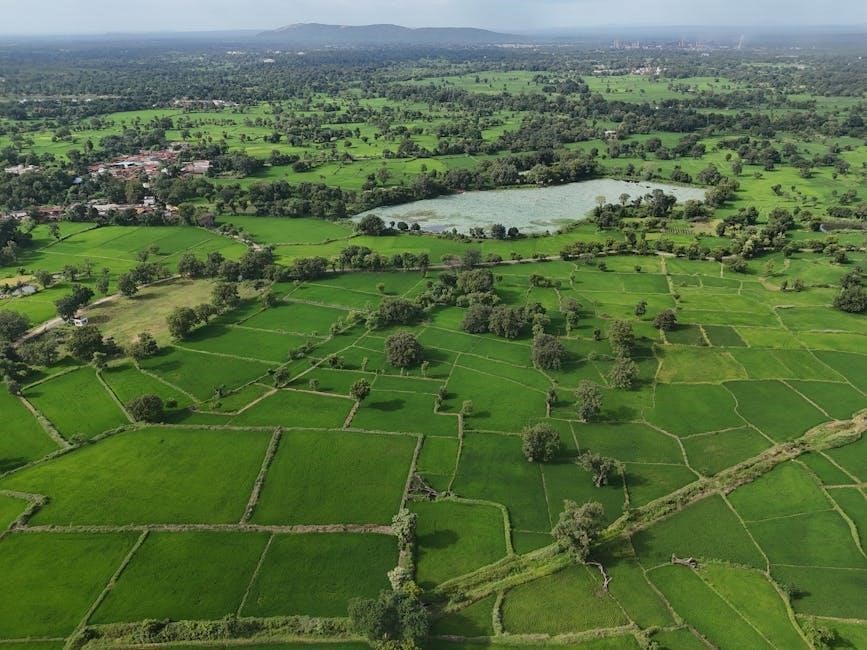
Fourth, check the surrounding environment for obstacles, people, and potential interference. Fifth, calibrate the compass if prompted by the DJI GO 4 app. Finally, review airspace restrictions and local regulations before takeoff, ensuring a legal and safe flight.
Flight Basics
Mastering basic flight controls is essential for a smooth and safe experience with your DJI Mavic Pro. To take off, gently push both control sticks diagonally downwards and outwards, or use the auto-takeoff function within the DJI GO 4 app. Landing is achieved by similarly maneuvering the sticks.
Utilize the left stick for altitude control and rotation, while the right stick governs forward/backward and sideways movement. Practice smooth, deliberate movements to maintain stable flight. Familiarize yourself with the return-to-home function for emergencies.
Taking Off and Landing
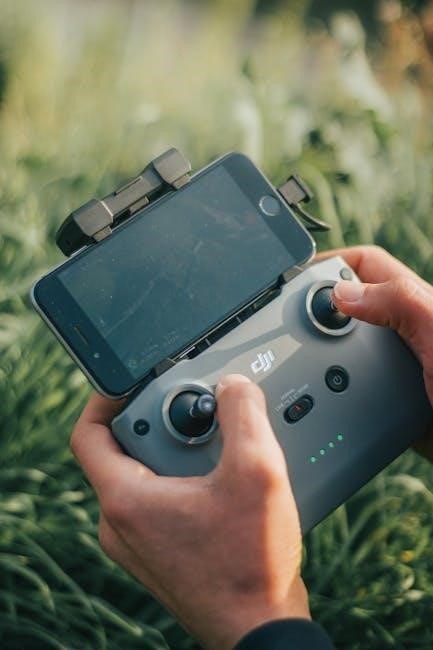
Taking off with your DJI Mavic Pro is straightforward. Ensure a clear, level surface. You can initiate auto-takeoff via the DJI GO 4 app, or manually by simultaneously pushing both control sticks diagonally downwards and outwards. Maintain stick position until airborne.
For landing, position the drone over your desired landing spot. Slowly descend using the left stick, ensuring a gentle touchdown. Alternatively, use the app’s auto-landing feature. Always monitor battery levels during descent and avoid landing in obstructed areas.
Basic Flight Controls
The DJI Mavic Pro utilizes intuitive controls. The left stick manages altitude and rotation – up/down for ascent/descent, left/right for yaw. The right stick governs forward/backward movement and strafing – forward/backward for pitch, left/right for roll.
Practice smooth stick movements for stable flight. Utilize the app’s virtual joystick for precise control. Understand that control sensitivity can be adjusted within the DJI GO 4 app settings to personalize your flying experience. Familiarize yourself with these basics for safe and enjoyable flights.
Intelligent Flight Modes
The DJI Mavic Pro boasts several intelligent flight modes enhancing your aerial experience. ActiveTrack allows the drone to autonomously follow a selected subject, keeping it framed within the camera’s view. Point of Interest (POI) circles the chosen subject, maintaining a consistent distance and angle.
Follow Me Mode enables the drone to track the remote controller, ideal for hands-free filming. These modes simplify complex maneuvers, allowing you to focus on capturing stunning footage. Always monitor the drone’s surroundings and be prepared to take manual control if needed.
ActiveTrack
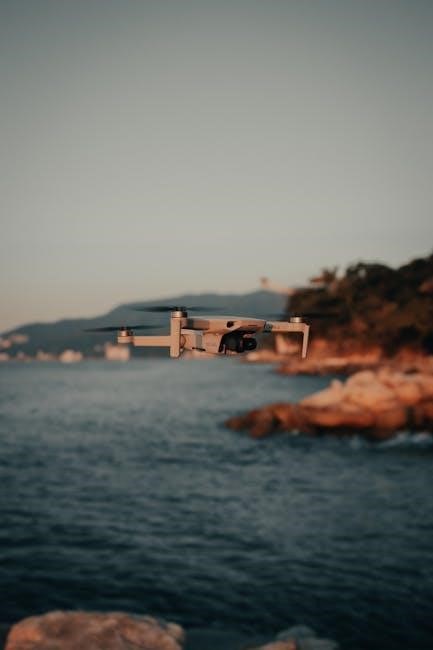
ActiveTrack on the DJI Mavic Pro allows for intelligent subject tracking, simplifying complex filming scenarios. After selecting a subject within the DJI GO 4 app, the drone autonomously follows, maintaining a lock even during movement. Three modes are available: Trace, Profile, and Spotlight.
Trace keeps the subject centered, Profile flies alongside, and Spotlight maintains the subject in the frame while you freely move the drone. Ensure a clear line of sight and be mindful of obstacles. ActiveTrack enhances creative possibilities, delivering smooth, professional-looking footage.
Point of Interest (POI)
Point of Interest (POI) mode on the DJI Mavic Pro enables the drone to orbit a selected subject automatically, keeping the camera focused on it. Within the DJI GO 4 app, simply tap on the desired subject, and the drone will smoothly circle around it, maintaining a consistent distance and angle.
This feature is ideal for capturing dynamic footage of moving subjects or showcasing a specific landmark. Users can adjust the orbit radius and flight speed for customized shots. Ensure a safe flying environment, free from obstructions, for optimal POI performance.
Follow Me Mode
Follow Me Mode, a key Intelligent Flight Mode on the DJI Mavic Pro, allows the drone to autonomously follow a selected subject – typically the remote controller operator. Activated through the DJI GO 4 app, the drone utilizes visual tracking to maintain a consistent distance and altitude, keeping the camera trained on the subject.
This mode is perfect for hands-free filming during activities like hiking or biking. Users can adjust the following distance and flight speed. Prioritize open spaces and maintain visual line of sight for safe operation, avoiding obstacles and ensuring reliable tracking.
Camera Settings and Operation
The DJI Mavic Pro boasts versatile photo and video modes accessible via the DJI GO 4 app. Users can select from options like Single Shot, Burst, Interval, and Panorama for photography, and various resolutions/frame rates for video recording. Adjust settings like ISO, shutter speed, aperture, and white balance for creative control.
Camera calibration is crucial for optimal image quality. Regularly perform calibration following the app’s prompts. Explore advanced settings for features like exposure compensation and histogram display. Understanding these controls unlocks the full potential of the Mavic Pro’s camera.
Photo and Video Modes

The DJI Mavic Pro offers diverse photo capture options, including Single Shot for standard images, Burst mode for action sequences, and Interval mode for time-lapses. Panorama mode stitches multiple images for wide-angle views. For video, choose from resolutions up to 4K at 30fps, or 1080p for smoother playback.
Explore manual settings for complete control over exposure and focus. Utilize pre-set scene modes for optimized results in various conditions. Experiment with different modes to achieve your desired creative vision, leveraging the camera’s capabilities.
Camera Calibration
Camera calibration is crucial for optimal DJI Mavic Pro image quality. Regularly perform gimbal and compass calibration following the on-screen prompts within the DJI GO 4 app. This ensures accurate flight stabilization and prevents unwanted camera drift. Calibration compensates for magnetic interference and sensor inaccuracies.
Before each flight, verify calibration status. If issues persist, recalibrate in an open area, away from metal objects and power lines. Proper calibration guarantees sharp, stable photos and videos, maximizing the potential of your drone’s camera system.
Safety Features
The DJI Mavic Pro incorporates several vital safety features. Return to Home (RTH) automatically flies the drone back to its takeoff point if signal is lost or battery is low. The advanced Obstacle Sensing System detects objects in flight, helping to avoid collisions – though reliance solely on this is discouraged.
Always maintain visual line of sight and understand the limitations of these systems. Regularly check for firmware updates to ensure optimal performance of safety features. Prioritize responsible flying and adhere to all local regulations for a safe and enjoyable experience.
Return to Home (RTH)
Return to Home (RTH) is a crucial safety feature of the DJI Mavic Pro. Activated automatically upon signal loss or critically low battery, it guides the drone back to its recorded takeoff point. Users can also initiate RTH manually via the DJI GO 4 app.

Ensure the RTH altitude is set higher than surrounding obstacles. The system utilizes GPS and visual sensors for navigation. However, RTH isn’t foolproof; environmental factors can affect accuracy. Always maintain awareness and be prepared to take control if necessary for a safe return.

Obstacle Sensing System
The DJI Mavic Pro incorporates an obstacle sensing system utilizing ultrasonic sensors and visual sensors to detect objects in its flight path. This system operates in three directions – forward, backward, and downward – providing a degree of collision avoidance.
However, it’s vital to understand the limitations. The system performs best in well-lit conditions and may struggle with transparent objects or low-contrast environments. Relying solely on obstacle sensing is unsafe; pilots must maintain visual line of sight and exercise caution during flight.
Maintenance and Storage
Proper maintenance ensures the longevity of your DJI Mavic Pro. Regularly inspect propellers for damage, and replace them as needed. Clean the aircraft with a soft, dry cloth, avoiding liquids near sensitive components. Store the drone in a cool, dry place, away from direct sunlight and extreme temperatures.
Battery care is crucial; follow the guidelines in the Battery Management section. When storing for extended periods, partially charge the battery to around 40-60%. Proper storage prevents degradation and maintains optimal performance for future flights.
Troubleshooting Common Issues
Encountering problems? This section addresses frequent DJI Mavic Pro issues. If the drone won’t connect, ensure the mobile device is compatible and the app is updated. For flyaway risks, verify a strong GPS signal and calibrate the compass. PDF manuals offer detailed solutions.

If the camera malfunctions, try recalibrating it. Poor video quality might stem from SD card issues or incorrect settings. Refer to DJI support resources or the Download Center for advanced troubleshooting steps and firmware updates to resolve complex problems.
Firmware Updates
Maintaining optimal performance requires regular firmware updates for your DJI Mavic Pro. These updates, available through the DJI Download Center and DJI GO 4 app, enhance stability, improve functionality, and address potential security vulnerabilities. Always download updates from official sources to avoid risks.
Before updating, ensure a stable internet connection and sufficient battery life. Follow the on-screen instructions carefully during the update process; interruption can cause damage. PDF manuals detail the update procedure. Updated firmware is crucial for accessing new features and ensuring compatibility.
Battery Management
Proper battery management is vital for the longevity and safe operation of your DJI Mavic Pro. Always use DJI-approved chargers and avoid overcharging. Store batteries at room temperature, partially charged (around 40-60%), for extended periods.
Regularly check batteries for any signs of damage, such as swelling or leakage. The DJI GO 4 app provides detailed battery health information. Refer to the manual for safe handling and disposal guidelines. Avoid extreme temperatures, as they can significantly reduce battery performance and lifespan.
Propeller Maintenance
Propeller maintenance is crucial for stable flight with your DJI Mavic Pro. Regularly inspect propellers for cracks, chips, or bends. Damaged propellers must be replaced immediately to prevent accidents. Ensure propellers are securely attached before each flight, using the correct orientation (marked on each prop).
Clean propellers with a soft, damp cloth. Avoid using harsh chemicals or solvents. Store propellers safely when not in use, protecting them from damage. Refer to the DJI manual for detailed instructions and replacement procedures.
Understanding Flight Restrictions
Understanding flight restrictions is paramount for legal and safe DJI Mavic Pro operation. Always check local regulations and airspace restrictions before flying. Utilize apps like DJI’s Fly Safe geo-fencing system, which displays no-fly zones.
Avoid flying near airports, prisons, or sensitive infrastructure. Be aware of temporary flight restrictions (TFRs) issued for events or emergencies. Respect privacy and avoid flying over private property without permission. Failure to comply with regulations can result in fines or legal penalties. Consult official sources for up-to-date information.
DJI Mavic Pro Specifications
The DJI Mavic Pro boasts impressive specifications for its compact size. It features a 12.7MP camera with a 3-axis gimbal, capturing stunning 4K video at 30fps. Maximum flight time is approximately 30 minutes, powered by a LiPo battery. The drone weighs around 743g and reaches a maximum speed of 65 km/h.
Its transmission range extends up to 7km with 1080p real-time video. Obstacle sensing operates up to 15m away. The Mavic Pro supports microSD cards up to 64GB. These specifications contribute to its versatility and performance.
Legal Considerations and Regulations
Operating the DJI Mavic Pro requires adherence to local aviation regulations. Pilots must register their drone with relevant authorities, like the FAA in the US, and understand airspace restrictions. Flying near airports or restricted zones is prohibited. Maintaining visual line of sight is crucial, and respecting privacy laws is essential.
Regulations vary by country; always check local guidelines before flying. Commercial use often necessitates a pilot’s license. Failure to comply can result in fines or legal repercussions. Responsible drone operation ensures safety and legality.
Accessories
Enhance your DJI Mavic Pro experience with a range of available accessories. These include extra Intelligent Flight Batteries for extended flight times, propeller guards for safer operation in confined spaces, and ND filters to control light exposure for cinematic footage.
A portable charging hub is ideal for field charging, while a hard shell case provides secure transport. Consider a landing pad for dust protection and a remote controller clamp for enhanced grip. DJI also offers specialized backpacks designed to carry the drone and accessories comfortably.
DJI Support and Resources
DJI provides extensive support for Mavic Pro users. Access the DJI Download Center for firmware updates, manuals, and software downloads. Explore the official DJI website for FAQs, troubleshooting guides, and detailed product information.
The DJI forum connects you with a community of pilots for sharing tips and resolving issues. Direct customer support is available via online chat or email for personalized assistance. DJI also offers repair services and authorized service centers for hardware concerns, ensuring continued optimal performance.
Advanced Camera Settings
Explore the Mavic Pro’s advanced camera functionalities for professional-quality results. Adjust settings like ISO, shutter speed, and aperture to control exposure and creative effects. Utilize manual focus for precise image sharpness and experiment with white balance for accurate color representation.
Dive into profile options like D-Log for enhanced dynamic range in post-production. Master histogram analysis for optimal exposure and utilize spot metering for targeted light measurement. These settings unlock the Mavic Pro’s full potential, allowing for cinematic and customized imagery.
Using Filters with the Mavic Pro
Enhance your Mavic Pro’s aerial footage with compatible filters. Neutral Density (ND) filters reduce light intake, enabling slower shutter speeds for smoother video in bright conditions. Polarizing filters minimize glare and reflections, boosting color saturation and clarity.
Proper filter installation is crucial; ensure a secure fit to avoid image distortion. Experiment with different filter strengths to achieve desired cinematic effects. Regularly clean filters to maintain optimal image quality. DJI recommends using filters specifically designed for the Mavic Pro camera.
Cinematic Flight Techniques
Achieve professional-looking aerial footage with deliberate flight maneuvers. Utilize slow, controlled movements for smooth panning and tilting shots. Employ the dolly zoom effect – flying towards or away while adjusting the gimbal – for dramatic reveals.
Master orbiting your subject for dynamic perspectives. Practice smooth ascents and descents, avoiding jerky motions. Utilize Intelligent Flight Modes like ActiveTrack and Point of Interest for automated cinematic sequences. Remember consistent framing and composition are key to captivating aerial storytelling.
Frequently Asked Questions (FAQ)
Q: How do I update the firmware? A: Download the latest firmware from the DJI Download Center and follow the in-app instructions. Q: What if my drone won’t connect to the app? A: Ensure your mobile device is compatible and the app has necessary permissions.
Q: How do I calibrate the compass? A: Follow the on-screen prompts in the DJI GO 4 app. Q: What do the LED indicators mean? A: Refer to the user manual for a detailed explanation of LED status. Q: Where can I find additional support? A: Visit the DJI support website.