Understanding Smart Heart Blood Pressure Monitors
Smart heart blood pressure monitors offer convenient, at-home tracking, integrating with apps for detailed analysis and data sharing with healthcare professionals.
What is a Smart Heart Blood Pressure Monitor?
Smart heart blood pressure monitors represent a significant advancement in personal health tracking. Unlike traditional devices, these monitors seamlessly connect to smartphones or tablets via Bluetooth, utilizing a companion app to record, analyze, and present your blood pressure data. They typically feature automatic inflation and deflation, simplifying the measurement process.
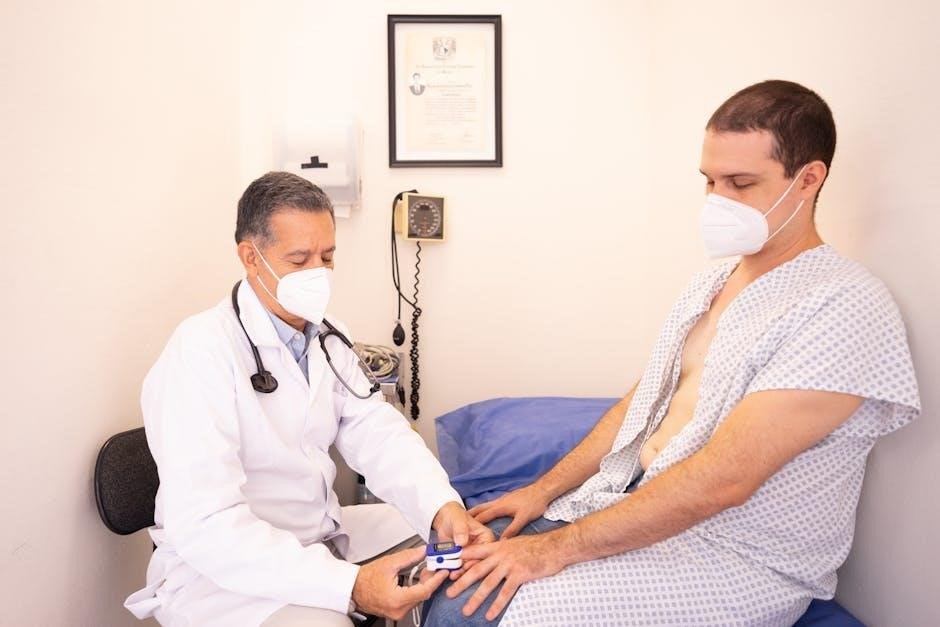
These devices aren’t just about numbers; they offer features like data storage, trend tracking, and even irregular heartbeat detection. Some models, like the Garmin device, integrate directly with existing fitness ecosystems. Crucially, accurate readings depend on following the instructions carefully, ensuring proper cuff placement and technique, as highlighted by health professionals emphasizing the importance of correct home monitoring.
Benefits of Using a Smart Blood Pressure Monitor
Smart blood pressure monitors empower individuals to proactively manage their cardiovascular health. Regular home monitoring, as recommended for hypertension, becomes more accessible and insightful. The convenience of at-home readings eliminates the need for frequent doctor’s visits solely for blood pressure checks.
Data tracking features within the companion apps reveal trends and patterns, aiding in personalized health management. Sharing this data with healthcare providers, facilitated by these devices, allows for more informed decisions. Following the instructions ensures accurate data, while features like irregular heartbeat detection offer an added layer of vigilance, contributing to overall wellness.
Setting Up Your Smart Heart Monitor
Setup involves downloading the companion app, creating an account, and carefully pairing the device via Bluetooth, following the manual’s instructions.
Downloading and Installing the Companion App
Begin by visiting your device’s app store (Apple App Store or Google Play Store). Search for the app specifically designed for your SmartHeart monitor – the name will be detailed in your quick start guide or instruction manual.
Once located, tap “Install” and allow the app to download and install on your smartphone or tablet. The download time will vary depending on your internet connection speed.
After installation, locate the app icon on your home screen or app drawer and tap it to launch. You may be prompted to grant the app certain permissions, such as access to Bluetooth and location services; these are generally necessary for proper functionality and data synchronization.
Carefully review and accept the terms and conditions before proceeding.
Creating an Account and Pairing the Device
Upon launching the companion app, you’ll typically be prompted to create a user account. This usually involves providing an email address and creating a secure password. Some apps may also request additional information like your date of birth or gender for personalized insights.
After account creation, the app will guide you through the device pairing process. Ensure your SmartHeart monitor is powered on and in pairing mode – consult the manual for specific instructions.
Enable Bluetooth on your smartphone. The app will then search for available devices. Select your monitor from the list when it appears. A pairing code may be displayed on both the app and the monitor; confirm they match to complete the connection.
Taking Accurate Blood Pressure Readings
Accurate readings require proper technique: use a validated upper-arm cuff, maintain a heart-level arm position, and follow the device’s instructions carefully.
Proper Positioning and Arm Placement
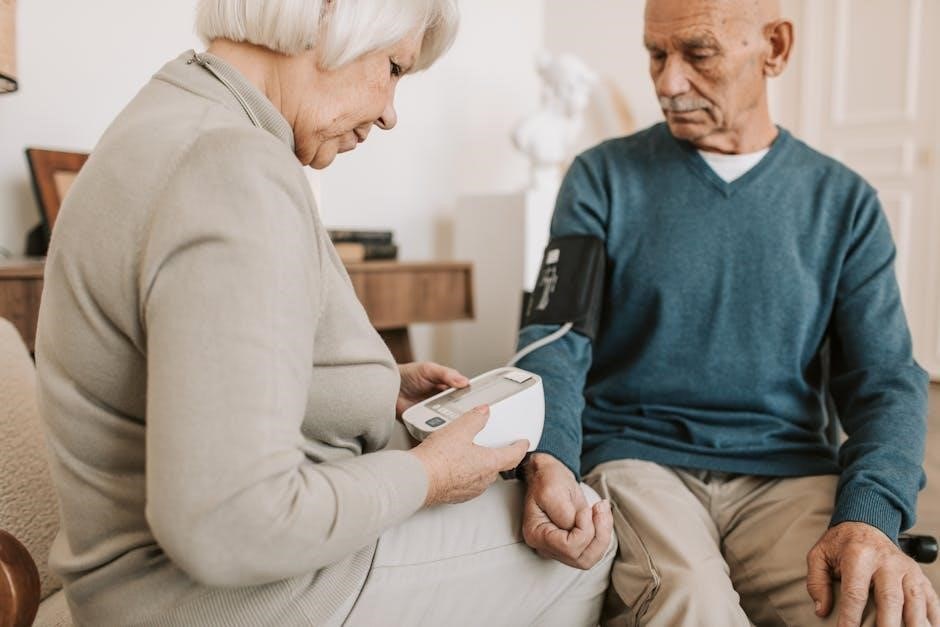
Achieving accurate blood pressure readings hinges on correct positioning. Sit comfortably with your back supported and feet flat on the floor – avoid crossing your legs. Ensure your arm is supported at heart level; this is crucial for reliable results.
The cuff should be placed directly on your bare upper arm, approximately one inch above the bend of your elbow. Avoid positioning the cuff over clothing, as this can significantly affect the measurement. Relax your arm and avoid talking or moving during the reading process. Consistent positioning each time you measure is key to tracking changes effectively and providing valuable data to your healthcare provider.
Using the Correct Cuff Size
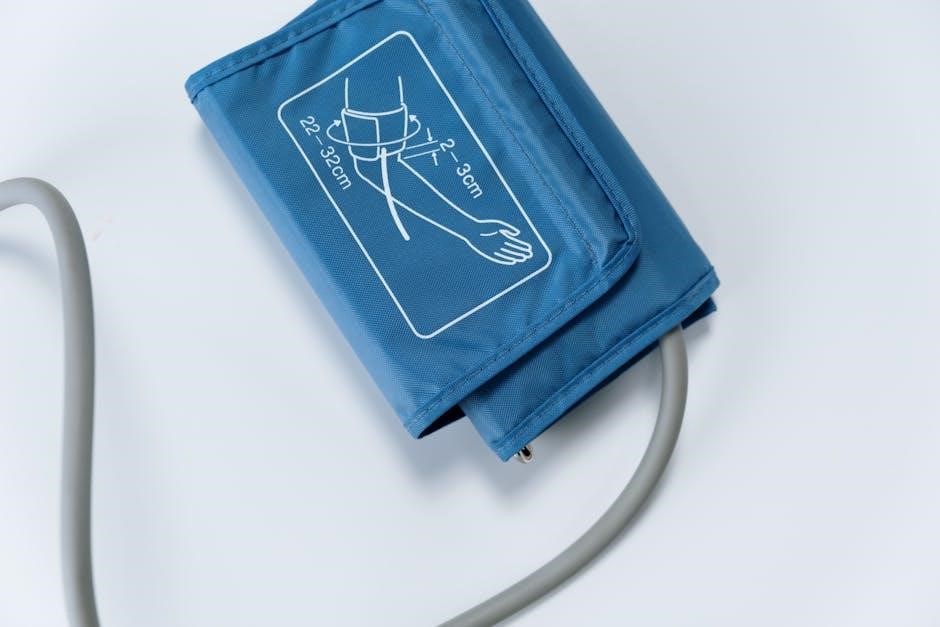
Selecting the appropriate cuff size is paramount for accurate blood pressure monitoring. Using a cuff that’s too small will yield falsely elevated readings, while a cuff that’s too large can produce artificially low results.
Measure your upper arm circumference to determine the correct size. Most monitors include a guide indicating the appropriate arm size range for each cuff. If your measurement falls between sizes, it’s generally recommended to choose the larger cuff. An ill-fitting cuff compromises the accuracy of the device, hindering effective health management. Always verify the cuff fits snugly, but not tightly, around your arm.
Step-by-Step Measurement Instructions
Begin by resting for five minutes before taking a reading. Sit comfortably with your back supported and feet flat on the floor. Apply the cuff to your upper arm, ensuring it’s positioned correctly – typically one inch above the elbow.
Press the start button and remain still and silent throughout the measurement process. Avoid talking or moving. The monitor will automatically inflate and deflate the cuff, displaying your systolic and diastolic readings. Record the results immediately. Repeat the measurement after a minute or two for greater accuracy. Follow the device’s specific instructions detailed in the manual.
Interpreting Your Blood Pressure Readings
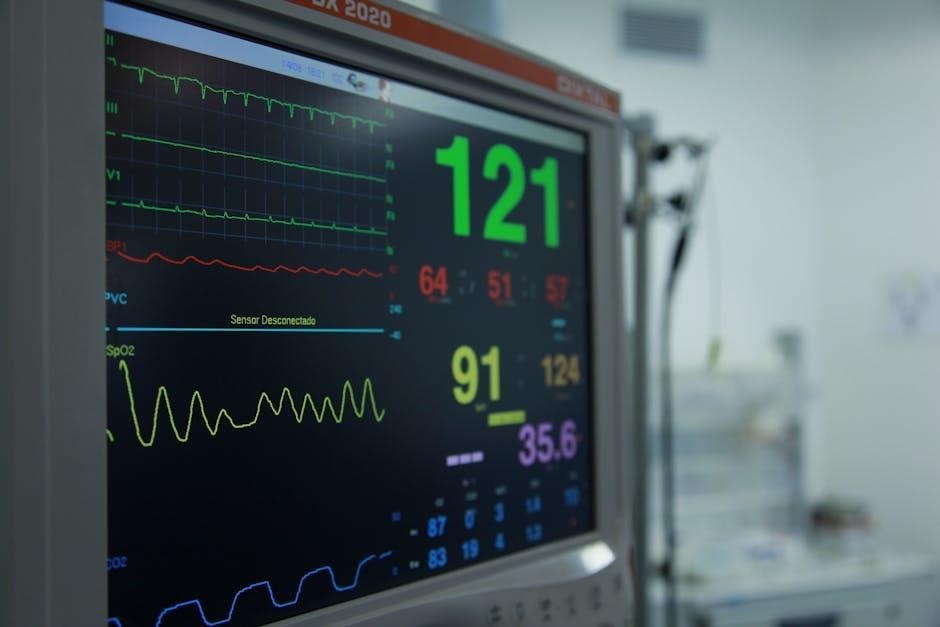
Understanding systolic (top number) and diastolic (bottom number) provides insight into heart health; consistent monitoring helps identify trends and potential concerns.
Understanding Systolic and Diastolic Numbers
Systolic pressure, the higher value, represents the force your heart exerts when beating, pushing blood through arteries. Diastolic pressure, the lower value, measures the pressure in arteries when your heart rests between beats. Both numbers are crucial for assessing cardiovascular health.
A typical reading is expressed as systolic/diastolic (e.g., 120/80 mmHg). Elevated systolic pressure often indicates stiffening of arteries with age, while high diastolic pressure can suggest increased resistance to blood flow. Smart monitors clearly display these values, enabling consistent tracking. Regularly noting both numbers provides a comprehensive picture of your blood pressure patterns, aiding in effective management and informed discussions with your doctor.
Blood Pressure Categories and What They Mean
Normal blood pressure is considered less than 120/80 mmHg. Elevated readings range from 120-129 systolic and less than 80 diastolic. Hypertension Stage 1 is 130-139 systolic or 80-89 diastolic, often requiring lifestyle changes. Stage 2 is 140/90 mmHg or higher, usually needing medication.
A hypertensive crisis exceeds 180/120 mmHg, demanding immediate medical attention. Smart monitors often categorize readings based on these guidelines, providing instant feedback. Understanding these categories empowers you to proactively manage your health. Consistent monitoring and awareness of your blood pressure level, facilitated by your smart device, are vital for preventing long-term cardiovascular complications.

Advanced Features and Functionality
Smart monitors store data, detect irregular heartbeats, and allow seamless data sharing with your doctor for comprehensive health management and informed decisions.
Data Storage and Tracking
Smart heart blood pressure monitors excel at meticulously storing your readings over time, offering a comprehensive history of your cardiovascular health. This data is typically synchronized wirelessly to a companion smartphone application, providing an easily accessible and visually engaging overview of trends.
Within the app, you can often view readings by day, week, or month, identifying patterns and potential concerns. Many devices allow for customized data export, facilitating easy sharing with your physician. Consistent tracking empowers you and your healthcare provider to make informed decisions regarding medication adjustments or lifestyle modifications, ultimately leading to better heart health management.
Irregular Heartbeat Detection
Many smart heart blood pressure monitors now incorporate advanced algorithms capable of detecting irregular heartbeats, often referred to as arrhythmia, during a reading. This feature doesn’t diagnose a condition, but rather alerts you to potential anomalies that warrant further investigation.
If an irregularity is detected, the monitor will typically display an icon or notification within the companion app. It’s crucial not to self-diagnose; instead, promptly share this information with your healthcare provider. They can then perform further tests, such as an ECG, to accurately assess your heart rhythm and determine if treatment is necessary. Early detection is key to managing potential heart issues.
Sharing Data with Your Healthcare Provider
A significant benefit of smart blood pressure monitors is the ability to seamlessly share your readings with your doctor. Most companion apps offer options to generate reports – often in PDF format – summarizing your blood pressure trends over specific periods.
These reports can be easily emailed to your physician or, in some cases, directly uploaded to a patient portal. Consistent data sharing allows for more informed discussions during appointments and enables your healthcare provider to adjust your treatment plan as needed. Regular monitoring and data transmission contribute to proactive heart health management and improved outcomes.
Troubleshooting Common Issues
Inaccurate readings and connectivity problems are frequent concerns; ensure proper cuff placement, battery levels, and app permissions for optimal performance.
Inaccurate Readings ― Causes and Solutions
Inaccurate readings from your smart blood pressure monitor can stem from several factors. Firstly, improper positioning – ensuring the cuff is at heart level – is crucial. Using the wrong cuff size significantly impacts accuracy; a cuff that’s too small or large will yield incorrect results.
Movement during measurement, talking, or even crossing your legs can elevate readings. Review the instruction manual for specific device guidance. Ensure the monitor is validated for clinical accuracy. If issues persist, replace the batteries, restart the device, and re-pair it with the app.
Finally, consistently follow the step-by-step instructions provided, and compare readings with a traditional manual monitor to verify consistency.
Connectivity Problems
Connectivity issues with your smart blood pressure monitor often arise during initial pairing or data synchronization. First, confirm Bluetooth is enabled on your smartphone or tablet. Ensure the monitor is sufficiently charged, as low battery can disrupt connections.
Within the companion app, check for firmware updates for both the monitor and the app itself. Restarting both devices frequently resolves temporary glitches. Verify the monitor isn’t already paired with another device.
Consult the instruction manual for specific troubleshooting steps related to your model. If problems persist, try uninstalling and reinstalling the app, and re-pairing the device following the instructions.
Maintaining Your Smart Heart Monitor
Regular cleaning with a soft, dry cloth and proper battery management, including timely replacements, will ensure optimal performance and longevity of your device.
Cleaning and Storage
To maintain the accuracy and hygiene of your smart heart blood pressure monitor, regular cleaning is essential. Always disconnect the cuff and power source before cleaning. Gently wipe the monitor and cuff with a soft, slightly damp cloth. Avoid using harsh chemicals, abrasive cleaners, or excessive water, as these can damage the device.
For storage, keep the monitor in a cool, dry place, away from direct sunlight and extreme temperatures. Store the cuff loosely coiled to prevent creases and maintain its shape. Avoid storing the device with heavy objects on top of it, which could cause damage. Proper storage extends the lifespan and ensures reliable performance when you need it most.
Battery Life and Replacement
Smart heart blood pressure monitors typically operate on standard batteries, often AA or AAA. Battery life varies depending on usage frequency and monitor model. Expect several months of use with moderate readings. The device will usually display a low battery indicator when replacement is needed.
To replace the batteries, locate the battery compartment (refer to your instruction manual). Remove the old batteries and insert new ones, ensuring correct polarity (+ and -). Always use high-quality batteries for optimal performance. Dispose of used batteries responsibly, following local regulations. Consistent battery checks ensure uninterrupted monitoring.
Safety Precautions and Warnings
Consult a doctor if readings are consistently high or irregular; these monitors aren’t substitutes for professional medical advice or treatment.
When to Consult a Doctor
Regular medical check-ups remain crucial, even with home monitoring. Consult your doctor if you experience consistently elevated readings despite lifestyle adjustments, or if you notice significant fluctuations. Seek immediate medical attention if you experience symptoms like severe headache, nosebleeds, vision changes, or chest pain alongside high blood pressure.
Irregular heartbeat detection by the monitor doesn’t diagnose a condition; a doctor needs to confirm it with an ECG. Don’t self-treat based on monitor readings; always follow your healthcare provider’s guidance. Share your tracked data during appointments to facilitate informed decisions about your treatment plan. Remember, smart monitors are tools to support, not replace, professional care.
Device Limitations
Smart blood pressure monitors aren’t foolproof. Accuracy depends heavily on proper technique – positioning, cuff size, and following instructions are vital. These devices may be susceptible to interference from movement or electrical signals. Wrist monitors, while convenient, can be less accurate than upper-arm models.
Irregular heartbeat detection isn’t a substitute for a professional ECG. The monitor provides data, but diagnosis requires a doctor’s evaluation. Connectivity issues can disrupt data syncing, so maintain a backup record. Understand that these devices are tools for monitoring, not definitive diagnostic instruments; always prioritize professional medical advice.